
How to Accept Website Sponsorships Successfully
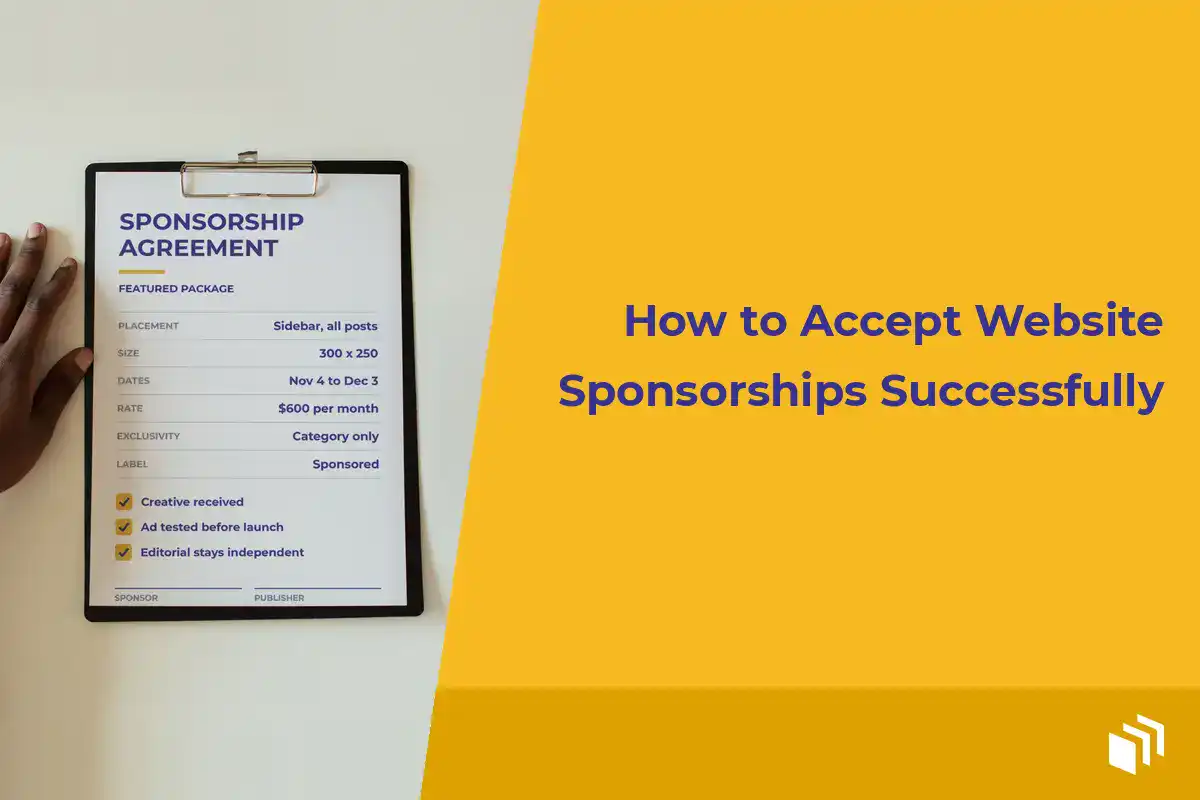
A sponsorship inquiry lands in your inbox and it feels great. Somebody wants to pay to be in front of your readers! But I’ve learned it isn’t a deal until everyone’s clear on what’s being bought. When you accept website sponsorships, you’re selling more than a banner position. You’re selling access to a specific audience, the place they read, and a set stretch of their attention. I think treating that inventory with care is what protects your readers and gives sponsors a reason to renew.
For WordPress publishers, direct sponsorships can sit nicely alongside ad networks, affiliate promotions, or membership revenue. You keep control of what shows up on your site, you negotiate terms directly, and you get to build relationships with businesses that actually fit your audience. The real work is setting up a process that’s simple enough to run every month.
Decide What a Sponsor Is Actually Buying
Start with your available inventory. A sponsor might be buying a spot in the site header, a unit in your category archives, a sidebar ad, or a slot in your newsletter (or some combination of those). I wouldn’t call every open space a sponsorship, though. A small sidebar unit is an ad placement. A prominent, repeated presence across a whole section of your site is something you can reasonably position as a sponsorship.
That distinction matters because sponsors usually expect visibility, context, and consistency. They may want to be tied to a topic, a season, an event, or a particular slice of your audience. A financial software company might sponsor your small-business resource center, while a local service provider is probably a better fit for a regional guide.
Before you sell anything, write down each placement’s location and dimensions. Note the devices it shows on, the estimated impressions, any rotation rules, and any exclusions. If a placement rotates among advertisers, say so. If it’s reserved for one advertiser, say that too. Ambiguity is where the difficult conversations start.
Build packages around useful outcomes
Packages are a lot easier to buy than a menu of disconnected ad slots. A basic package might include one display placement for 30 days. A higher tier could add a second placement, category-level exclusivity, and a mention in a relevant email send.
Keep your packages grounded in what you can deliver every single time. Don’t promise social promotion, dedicated articles, or newsletter spots if your editorial calendar and your audience won’t support it. Sponsored content takes more editorial time and clearer disclosure than a standard display campaign, so I’d price and manage it separately.
Exclusivity is valuable, but it isn’t free. If you agree not to run competing ads, you may be giving up revenue from another advertiser. So define competitors narrowly. “No other accounting software sponsor in this category” is manageable. “No competitor advertising anywhere on the site” usually isn’t.
Set Rates Before You Need to Accept Website Sponsorships
If you haven’t done the math ahead of time, the first sponsor who asks will often end up setting your pricing for you. I’d avoid picking a rate just because it sounds reasonable. Begin with your traffic and how visible the placement is. Then factor in audience fit and the value of any extras you’re including.
A CPM-based calculation gives you a useful baseline. If a placement gets 50,000 monthly impressions and you value it at a $12 CPM, the baseline monthly value is $600. Direct sponsorships can command more than that when the audience is specialized, the placement is prominent, or the advertiser gets category exclusivity.
That number isn’t a universal answer, though. A newer site with a very specific B2B audience may have lower traffic but more sponsor value than a general-interest site with bigger pageview totals. And a placement readers actually notice may be worth more than a high-impression unit they scroll right past.
Set a minimum campaign length. Thirty days is common because it gives the sponsor enough time to see meaningful results and keeps the admin side manageable. One-week campaigns mean more setup, more invoice chasing, and less reliable performance data. They can make sense for an event, a product launch, or a seasonal promotion… I just wouldn’t make them your default.
Create a Simple Sponsorship Policy
A published media kit helps, but you also need an internal policy for the decisions that won’t fit on a sales page. Decide which industries you’ll accept and which claims need extra review. Then decide which categories are off limits.
For example, you might decline misleading health claims, gambling offers, low-quality lead generation, political campaigns, or products that would cost you your audience’s trust. The exact boundaries depend on your publication. What matters is applying them consistently.
Your policy should protect editorial independence too. Sponsors can buy ad inventory. They don’t buy favorable coverage, control over your opinions, or approval rights over unrelated content. If you offer sponsored posts or reviews, label them clearly and set up the editorial process before you accept any payment.
A good sponsorship agreement doesn’t need to read like a 30-page enterprise contract. It does need the campaign dates, placements, creative specs, and total price. It also needs payment timing, cancellation terms, the reporting cadence, and what happens if creative shows up late. And include your right to reject or pause creative that doesn’t meet your standards or causes technical problems.
Make Creative Collection and Placement Routine
So many campaigns get delayed because the sponsor sends incomplete files, an outdated destination URL, or creative that doesn’t match the agreed dimensions. Ugh. Give advertisers a simple submission checklist. Ask for the final image or HTML5 unit, the click-through URL, any tracking requirements, start and end dates, and a contact who can approve changes quickly.
For a standard direct-sold display campaign, you’ll typically need these four items:
- The approved ad creative in the required format and size
- The final landing page URL
- Start and end dates, including the correct time zone
- A campaign contact for questions and reporting
Test every ad before it goes live. Check the click destination and how it looks on mobile. Check the file weight, and whether the unit shifts the page layout or slows loading. Third-party ad tags deserve extra attention because they can bring in redirects, tracking scripts, or performance problems that are outside your control.
A WordPress-native tool like AdSanity keeps this whole process inside your normal publishing workflow (it’s what we built it for). You can schedule campaigns, rotate ads where rotation makes sense, and place units with blocks, widgets, or template tags. You can also keep an eye on impressions and clicks without manually adding and removing code on individual pages.
That consistency really matters once you have more than one sponsor. It cuts down the chance that an ad runs past its end date or disappears when a theme template changes.
Report Results Without Overselling Them
Sponsors need proof that their campaign ran the way you agreed. At a minimum, send impressions, clicks, click-through rate, the campaign dates, and a record of the placements included. Send it on a predictable schedule, like at the end of a monthly campaign or midway through a longer one.
Be honest with the metrics. Clicks are useful, but a lower click-through rate doesn’t automatically mean a campaign failed. Brand awareness campaigns, niche B2B offers, and high-consideration purchases often get fewer immediate clicks than discount-driven consumer offers. If the sponsor runs their own conversion tracking, their results may tell a more complete story.
Context helps a lot. Explain whether traffic was typical, whether a seasonal event affected impressions, or whether the placement was rotated. I’d never invent a positive story around weak results, but I do want the sponsor to have enough information to understand the numbers.
Earn Renewals Through Communication
The easiest sponsorship sale is often the renewal, as long as the first campaign was organized. Reach out before the campaign ends, not after the placement has already expired. Share the report, ask what the sponsor learned, and suggest a next step based on their goals.
A sponsor looking for broader awareness might do well with another month or a more visible placement. A sponsor with strong results in one category may want to extend that category exclusivity. And if the fit was poor, I think it’s better to be candid than to push a renewal that’s going to disappoint both of you.
Direct sponsorships work best when they feel dependable to everyone involved. Your readers see relevant ads in sensible places. Sponsors get the visibility they paid for and reporting they can actually use. And you keep control of your WordPress ad inventory without ad operations turning into a full-time job. Start with a small, clearly defined offer, run it well, and let that reliability become the reason the next sponsor says yes.

Written by
Prêt à commencer ?
Time to take control of your ads.
Find your perfect plan and go for it.



Our Community
Join our mailing list to keep up to date on everything happening with AdSanity and Pixel Jar.
Note: Your email address will be added to our CRM and be used to receive emails from Pixel Jar. You can unsubscribe at any time.
Our Partners

Ready to Make Money With Your Site?
Get ads on your site in
60 minutes or less
with AdSanity.
With our 14-day money back guarantee, it’s easy to see if AdSanity is the right fit for you.

