
What Makes Ads Load Slowly on WordPress Sites?
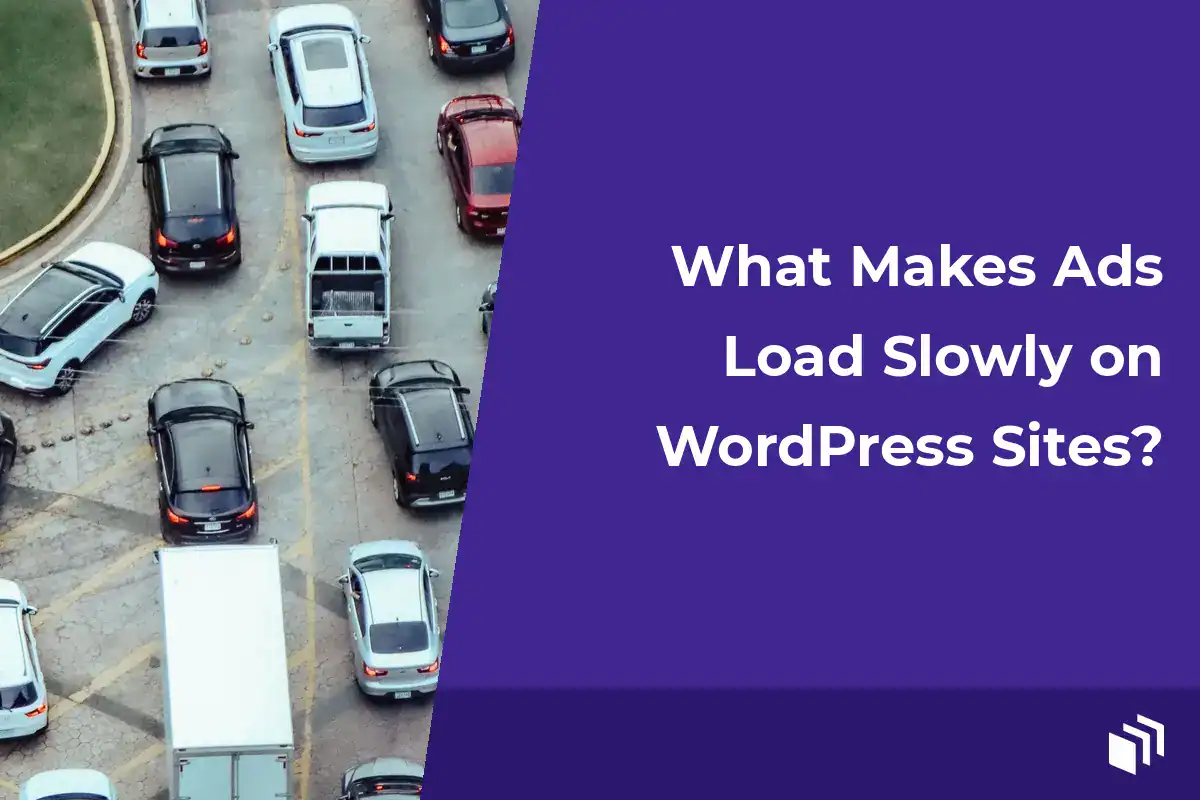
You publish a great article, someone lands on it, and the content shows up right away. Then the whole page jumps as the ads finally catch up. Or worse, the ad slots sit there empty long enough that the reader scrolls right past them. I’ve seen this on plenty of WordPress sites over the years, and when people ask me what makes ads load slowly, the answer is almost never one plugin or one bad line of code. Ads depend on a whole chain of requests, scripts, auctions, and creative files, so one slow link can hold up everything behind it.
I also don’t think the goal is to make every ad pop in instantly. Some ads should wait until after the main content loads (especially the ones further down the page). What you really want is to protect the reading experience while still giving your paid placements a fair shot to render, track, and earn.
What Makes Ads Load Slowly?
An ad slot is a lot more than an image dropped into a post. A self-hosted banner might need a WordPress page request, an image download, and click tracking. A network ad can kick off a tag, a consent check, a bunch of bidder requests, an auction, and a creative response, and then pull in even more third-party code for viewability. That’s why two placements on the same page can behave so differently.
Too many third-party requests
Every ad network, header bidding partner, analytics platform, and creative vendor adds requests. Each one has to connect to another server and wait for an answer. Sometimes it downloads more JavaScript on top of that. A single ad tag can drag along several domains you don’t control at all.
The trade-off is real. More demand sources might bump up your fill rate or bid competition, but every partner adds latency too. If you’ve got modest traffic and a straightforward direct-sales program, I think you’ll usually get more out of a small, dependable stack than a complicated auction setup that slows down the whole page.
Heavy or poorly built creative
Sometimes the ad server responds quickly and the creative itself is the problem. Big images, uncompressed video, animation-heavy HTML5 ads, custom fonts… they all eat bandwidth and make the browser work harder. An ad might technically load and then take forever to paint or animate.
I like HTML5 ads for modern campaigns, but they need guardrails. Set file-size expectations with your direct advertisers up front. Test the finished creative on a mobile connection. And don’t let arbitrary third-party code into your premium placements without someone looking at it first. A flashy ad isn’t worth much if it makes your article feel broken.
Scripts competing for the browser
The browser only has so much time to parse HTML, run JavaScript, calculate styles, and paint the page. Ad scripts that run early or execute a lot of code end up fighting with your theme and every other plugin for that time.
You really notice this on phones and older laptops. A desktop test on a fast office connection might look fine while your actual readers are staring at delayed content and shifting layouts. Download size is only part of the story. JavaScript execution time matters just as much.
Slow auctions and timeout settings
Programmatic advertising adds one more timing decision. How long should the page wait for bids? Set the timeout too short and you miss valid bids (and revenue). Set it too long and the page sits around waiting on bidders that were never going to answer in time.
There’s no magic number that works for every site. I’d look at your bidder response data instead of just trusting the defaults. If a partner regularly shows up late, rarely wins, or barely contributes revenue, it probably doesn’t deserve a spot in the request path.
WordPress Issues That Can Delay Ad Delivery
Ad code doesn’t run in a vacuum. It runs inside a WordPress page that has its own hosting, theme, plugins, database queries, caching rules, and front-end assets. So when the base page is slow, your ads are starting from behind.
A slow page starts the ad request late
If your server takes too long to build the page, the browser can’t even find most of your ad placements until the HTML shows up. Slow hosting, uncached pages, expensive database queries, bloated page-builder output, and plugin conflicts can all push server response time up.
I always start by checking whether the document itself arrives quickly. If the initial HTML is slow, tweaking ad code isn’t going to fix what your visitors experience. A good host with full-page caching and a current version of PHP can make a real difference before the first ad request even fires. A leaner template helps too.
Caching and optimization settings can break timing
Caching plugins and performance tools are great, but aggressive script optimization can mess with ad delivery. Deferring, delaying, combining, or moving scripts around can cause an ad library to initialize after its placement code has already run. I’ve even seen ads that only show up after someone scrolls or clicks, because a “delay JavaScript” setting decided the ad tag wasn’t important.
Change one thing at a time and test. Only exclude ad scripts from optimization when testing shows you actually need to, rather than excluding every marketing script by default. In my experience, the lightest setup that works is also the easiest one to maintain.
Placement logic can create extra work
When a site has multiple widget areas, in-content insertions, sticky units, and conditional display rules, there are a lot more chances for duplicate calls or empty slots. A unit might get requested in a sidebar that’s hidden on mobile. Or an ad might get initialized twice, once by a theme hook and again by a page builder module.
Review your placements by device and by template. Every ad request should have a job to do. Cutting low-value slots can improve viewability and clean up the page, and it leaves more room in the browser for the placements that actually earn.
How to Find the Actual Bottleneck
Watching a page reload once won’t tell you much. Open up your browser’s developer tools and record a network waterfall on both desktop and mobile settings. Look at when the HTML arrives, when the ad tag starts, how long each third-party request waits, and when the creative finally renders.
A few patterns are super helpful here. If all the ad activity starts late, look at page generation and render-blocking scripts. If the ad tag starts quickly but then waits on a network response, the problem is probably an outside partner or your auction setup. And if the network response is fast but the slot still renders late, take a closer look at the creative and how hard the browser is working.
Then compare what you found with your ad reporting. A slow partner might still be worth keeping if it brings in real incremental revenue, but I’d make that call by looking at revenue, fill rate, viewability, and speed together. Fast empty slots don’t help anybody. Neither do high-paying placements that annoy readers enough to cut into your long-term traffic.
Practical Ways to Make Ads Load Faster
Start with the page itself. Keep your theme and plugin stack focused and use page caching where it fits your publishing workflow. Compress your images and keep an eye on server response time. Ads load better when the page underneath them gives their scripts a head start.
Next, go through every external advertising and tracking script on the site. Get rid of retired vendors, duplicate tags, and anything that doesn’t have a clear reporting or revenue purpose. If you’re working with multiple demand partners, check their response times regularly and set auction limits based on real data.
Be careful with lazy loading below the fold. It cuts down on initial page work and saves bandwidth, but if an ad loads too late, the slot might not be ready when the reader gets there. A reasonable preload distance lets the ad start loading before it scrolls into view. Test this on mobile, where scroll speed and connection quality are all over the place.
Reserve space for every unit with set dimensions or responsive containers. That won’t make the network any faster, but it stops your content from jumping around when the ad finally arrives. Readers stay oriented, and the page just feels more professional.
For direct-sold and self-hosted inventory, keep your creative standards simple. Compress image assets, keep animations light, and skip unnecessary external dependencies. This is a big part of why we built AdSanity to work right inside WordPress. You can handle scheduling, placement, and reporting for the inventory you control in one place, without bolting on a heavyweight standalone ad server.
Treat Ad Speed as a Revenue Decision
The fastest possible setup isn’t always the most profitable, and the most complicated one isn’t always the top earner either. What works best for you depends on your audience, where your traffic comes from, the devices people use, your direct-sales commitments, and what each partner actually adds.
Make one measured change at a time, then watch page performance alongside impressions, viewability, engagement, and revenue. I think of it a bit like tuning up a car… you don’t swap out the engine, the tires, and the transmission all at once and hope for the best. Small adjustments, one at a time, and you’ll know exactly what’s working. Your readers get more time with your content, and your best placements get a better chance to perform.

Written by
Pronto para começar?
Time to take control of your ads.
Find your perfect plan and go for it.




Our Community
Join our mailing list to keep up to date on everything happening with AdSanity and Pixel Jar.
Note: Your email address will be added to our CRM and be used to receive emails from Pixel Jar. You can unsubscribe at any time.
Our Partners

Ready to Make Money With Your Site?
Get ads on your site in
60 minutes or less
with AdSanity.
With our 14-day money back guarantee, it’s easy to see if AdSanity is the right fit for you.

